A boiler losing pressure can be a frustrating and inconvenient issue, particularly when you rely on it for both heating and hot water. Imagine coming home on a cold evening after a long day at work, only to find that your radiators are cold and your shower isn’t running as it should. Boiler pressure is a crucial aspect of any heating system, and when it drops too low, your boiler may stop functioning properly. If left unresolved, this can lead to more significant heating problems that could leave you without warmth and hot water when you need it most.
At Clarke’s Gas Services, we have seen all kinds of boiler issues, and low pressure is one of the most common problems that homeowners face. In this guide, we will explain what boiler pressure is, why it drops, what you can do to fix it, and when to call in an expert to avoid further complications.
If you don’t have time to read this – here is a short answer! If your boiler is losing pressure, it’s usually due to a leak, a faulty component, or recently bled radiators. Topping up the pressure may help temporarily, but a professional should check for underlying issues.
Understanding Boiler Pressure and How It Works
Boiler pressure is essentially the force at which water circulates through your central heating system. Most modern heating systems, including combi boilers and system boilers, operate using a sealed pressurised system. This means that the water in your radiators and pipes is filled from the mains supply and then sealed off once the system reaches the required pressure. Unlike open-vented systems that use a water tank, pressurised boilers do not rely on gravity to move water around, making them more efficient and responsive.
For a heating system to function correctly, it must maintain a stable pressure level. The ideal boiler pressure usually falls between 1 and 2 bar when the system is cold. If the pressure drops below this level, your boiler may stop working efficiently, and you could experience cold radiators, loss of hot water, or error messages on your boiler’s digital display. Fortunately, most modern boilers are equipped with a built-in pressure gauge, which allows you to monitor the system and take action if the pressure starts to drop.

What Can You Do If Your Boiler Pressure Is Low?
If your boiler pressure has dropped below 1 bar, the fastest and easiest short-term solution is to top it up. Many homeowners can do this themselves without needing professional help. However, it is important to understand that this is only a temporary fix and does not address the root cause of the pressure loss.
To top up your boiler pressure, you will need to locate the filling loop. Boilers have either an internal filling loop, which is built into the boiler unit, or an external filling loop, which is usually a silver braided hose connected to the incoming water pipe. On an external filling loop, there is a small valve handle that can be turned to allow water to flow into the system. If the valve handle is in line with the pipe, the water is flowing; if it is turned across the pipe, it is closed.
To re-pressurise your boiler, slowly turn the valve to allow water into the system while keeping an eye on the pressure gauge. Once the pressure reaches between 1 and 2 bar, close the valve again to isolate the mains supply. Your boiler should now function properly. If the pressure continues to drop, this indicates a more serious issue that requires the attention of a professional heating engineer.
Why Is My Boiler Losing Pressure?
There are several possible reasons why your boiler pressure keeps dropping. In some cases, the issue may be simple, such as air being released from the system after bleeding radiators. However, persistent pressure loss often points to a leak, a faulty component, or an issue with the expansion vessel. At Clarke’s Gas Services, our expert engineers have identified the most common causes of low boiler pressure and how to address them.
1. Leaking Pipework or Radiator Valves
A leak in your central heating system is the most common cause of pressure loss. Even a small, slow leak can cause the pressure to drop over time, leading to issues with your heating and hot water. Leaks are often found at radiator valves, pipe joints, or inside the boiler itself. If you suspect a leak, one way to check is by running your hand along the radiator valves and visible pipework to feel for any signs of moisture.
If you find a leak, it may be possible to tighten a loose connection yourself. However, it is always best to call a professional plumber to inspect the system properly. A qualified heating engineer can detect hidden leaks using specialist equipment and ensure that the problem is fully resolved, preventing further pressure loss.
2. Faulty Expansion Vessel
The expansion vessel is an essential component within a pressurised boiler system. It is designed to regulate pressure by absorbing excess water as it expands when heated. Over time, the expansion vessel can lose its charge due to wear and tear, leading to a drop in pressure. One way to check if the expansion vessel is faulty is to inspect the pressure relief valve, which is a small copper pipe located on the outside wall near the boiler. If water is leaking from this pipe, it could indicate a problem with the expansion vessel.
Another sign of expansion vessel failure is if your boiler loses pressure more frequently when the weather is cold. This happens because the system is unable to accommodate changes in temperature effectively. If you suspect an issue with the expansion vessel, you will need to call a heating engineer to recharge or replace it.
3. Broken Boiler Components
If your boiler is old or has not been serviced regularly, internal components can start to fail, leading to a drop in pressure. Key parts such as the pressure sensor, filling loop, or heat exchanger can develop faults that cause the system to lose pressure. If you have ruled out leaks and expansion vessel issues but your boiler is still losing pressure, it is likely that a broken component is to blame. In this case, you should contact a Gas Safe registered engineer to inspect the boiler and carry out any necessary repairs.
4. Recently Bled Radiators
Bleeding radiators is a great way to improve the efficiency of your heating system by releasing trapped air. However, when you release air from the system, you also lower the overall pressure. If you notice that your boiler pressure has dropped after bleeding your radiators, you will need to top up the pressure using the filling loop as described earlier.
Why You Should Call a Professional
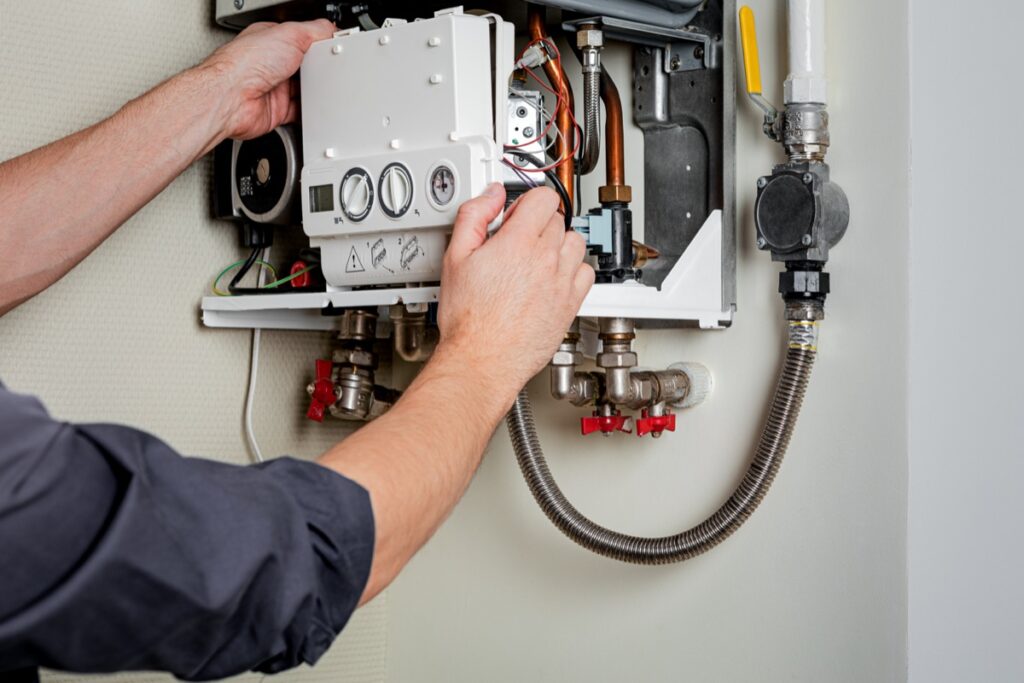
While it may be tempting to keep topping up your boiler pressure whenever it drops, this is not a long-term solution. Continuous pressure loss is a sign that something is wrong with your heating system, and ignoring it could lead to bigger problems down the line. A professional heating engineer will be able to diagnose the root cause of the issue and provide a lasting solution, ensuring that your boiler operates safely and efficiently.
At Clarke’s Gas Services, our experienced plumbers and heating engineers are fully trained to deal with boiler pressure issues, leaks, faulty components, and complete system failures. We understand how important it is to have a reliable heating system, which is why we offer prompt and efficient services to get your boiler back up and running as quickly as possible.
Book an Appointment with Clarke’s Gas Services
If your boiler keeps losing pressure and you’re unsure why, don’t wait for the problem to get worse. At Clarke’s Gas Services, we provide expert boiler repairs and servicing to customers across Kent, including Faversham, Maidstone, and Canterbury. Our Gas Safe registered engineers can quickly diagnose and resolve any issues, giving you peace of mind that your heating system is working as it should.
For professional boiler repairs, servicing, and plumbing solutions, contact Clarke’s Gas Services today. Our team is always on hand to help with any heating or plumbing issues, ensuring that your home stays warm and comfortable all year round.